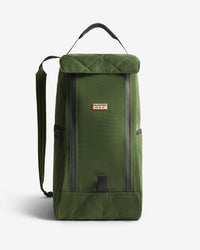









Wellies Care Guide
Discover how to clean, care for and store your wellies so they stay ready for every adventure.
Discover how to clean, care for and store your wellies so they stay ready for every adventure.
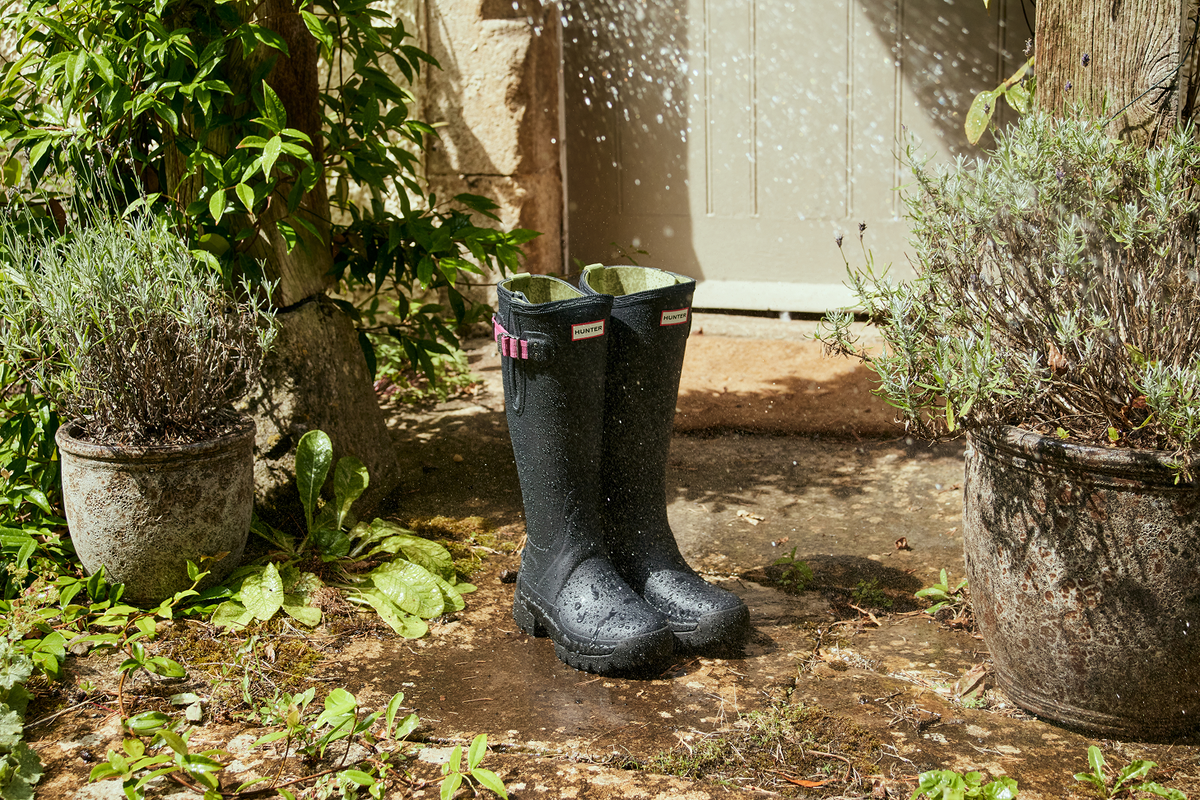
Clean rubber boots promptly after use to help prevent soil, mud and salt from degrading the natural rubber over time.
What not to use
Never use bleach, harsh chemical detergents, solvents or abrasive scouring pads. They can weaken natural rubber, cause discolouration and speed up cracking.
Dirt, sweat and moisture can build up inside boots over time, contributing to bacteria growth, unpleasant odours and dampness.
Tips for reaching inside
Ankle boots, including Chelsea wellies: Use the wide opening to reach in with a sponge or cloth. Tall or knee-high boots: Roll down flexible neoprene linings where applicable, or wrap a damp microfibre cloth around a long wooden spoon or ruler to reach the toe box.

Blooming is a completely natural process. Insoluble waxes in high-quality natural rubber can migrate to the surface, helping protect your wellies. It is not a defect and can be easily removed.
Recommended

Simple care helps protect the shape and finish of your wellies.
Natural rubber can dry and become less flexible when exposed to prolonged sunlight, UV rays or heat. This can leave the surface brittle and more likely to crack.
Help prevent cracking
Surface dryness or gradual changes after prolonged exposure to sun, heat or unsuitable storage may be consistent with wear or care conditions. A sudden crack under normal use, particularly on a newer pair, may warrant assessment. Keep proof of purchase and contact the retailer for guidance; warranty coverage depends on the applicable terms and inspection.
Repeated stress at the boot’s flex points can contribute to splitting over time. Pulling boots off by the heel or forcing them off can also place extra strain on the rubber and seams.
Help prevent splitting
Gradual wear or a split developing at a repeatedly flexed area after extended use may be consistent with normal wear. A split that appears unusually early, or a separation that may indicate a defect, should be assessed by the retailer. Warranty decisions depend on the applicable terms and inspection.
Explore our boot care accessories to find products and tools for caring for your wellies.
A few simple habits can help keep your wellies comfortable and ready for many seasons.
Use a boot jack to remove your wellies gently, avoiding forceful pulling that can strain the boots.
Apply a suitable silicone spray regularly, following the product instructions, to help care for the rubber surface.
Wear moisture-wicking Wellington socks to help keep feet comfortable and manage moisture inside your boots.
Explore boot care essentials to look after your wellies, or find your next pair in our women's and men's collections.
A white, chalky film can appear on natural rubber wellies as waxes migrate to the surface. It is a normal characteristic of rubber and is not a fault. Wipe the boots with a damp cloth and use a rubber boot care product if needed.
No. Machine washing can damage the rubber, seams and lining. Clean the outside with lukewarm water and a soft cloth, then allow the boots to air dry naturally.
Let the boots and insoles dry fully between wears. Remove the insoles if possible, air them separately, and store the boots upright in a cool, dry, well-ventilated place. Avoid putting damp boots away.
No. Direct heat can dry out or deform the rubber and may damage the lining. Wipe away excess water and let the boots dry at room temperature, away from radiators and direct sunlight.
Wipe the outside with a damp cloth and mild soap. Clean the lining gently with a cloth and a small amount of mild soapy water, then wipe with clean water and air dry thoroughly. Do not machine wash or use strong detergents.
Cracking can result from age, prolonged exposure to heat or sunlight, or natural wear. Rubber wellies are not generally designed for home repair; stop wearing boots with cracks and contact the retailer or manufacturer for advice about assessment and repair options.
Leaks may be caused by punctures, split seams or wear. Check where water is entering and contact the retailer or manufacturer for advice. A leak may not be repairable, and any repair can affect the boot's waterproof performance.