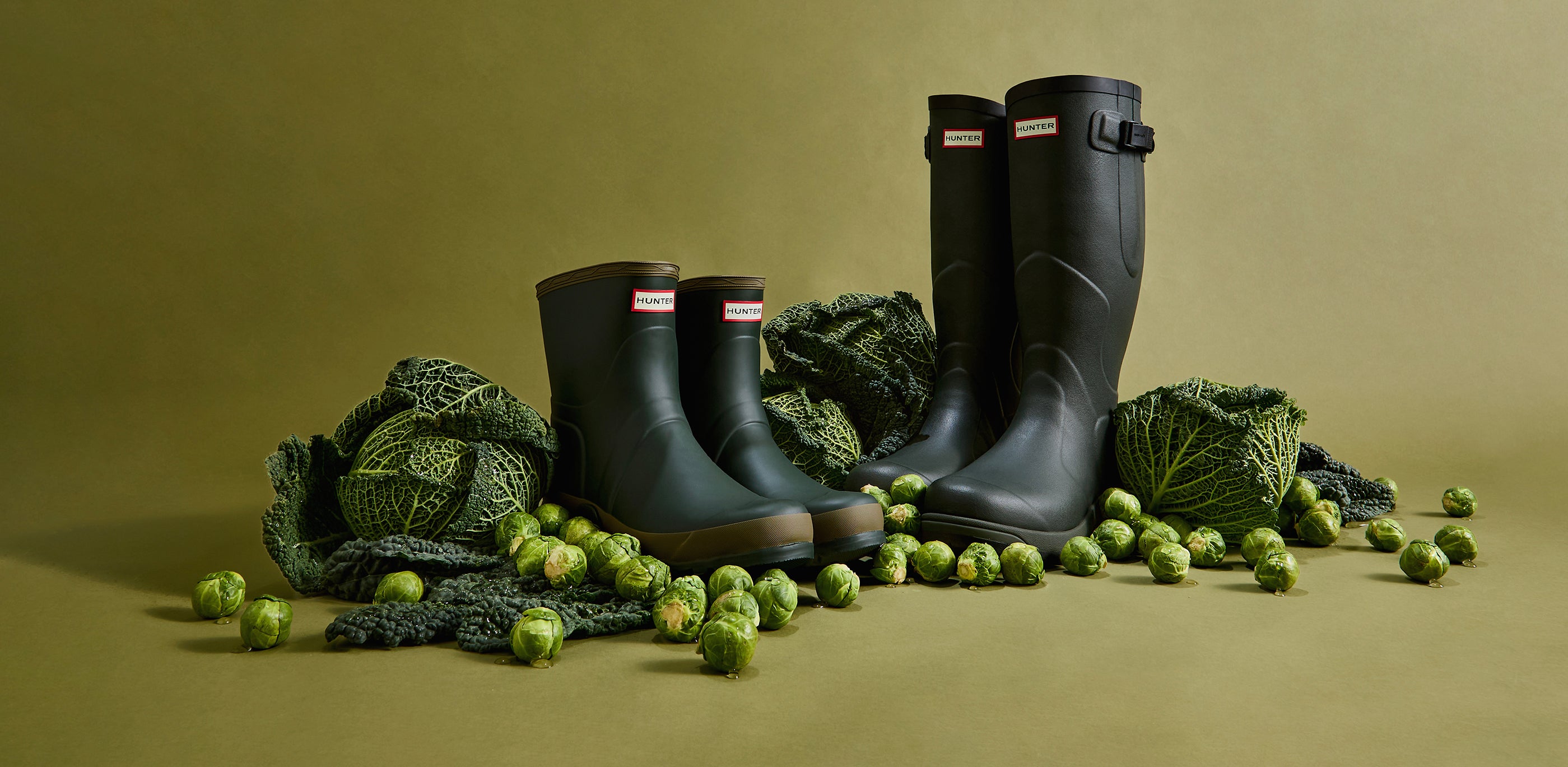
A pair of Hunter Wellington Boots pictured in an outdoors setting. They are in a puddle with water being sprayed towards them, surrounded by plants.

Wellies Care Guide

Discover how to clean, care for and store your wellies so they stay ready for every adventure.

Shop Boot Care

How to Clean Your Wellies

How to Clean the Outside of Your Wellies

Clean rubber boots promptly after use to help prevent soil, mud and salt from degrading the natural rubber over time.

  1. Remove loose mud and dirt

    Allow heavy mud to dry slightly, then brush it away with a soft-bristled brush or damp cloth.

  2. Wash with mild soap and lukewarm water

    Mix warm water with a few drops of mild dish soap. Wipe the exterior with a soft sponge or cloth.

  3. Clean the sole and tread grooves

    Use an old soft toothbrush or small stiff brush to clear caked mud and grit from the tread grooves underneath.

How to Clean the Inside of Your Wellies

Dirt, sweat and moisture can build up inside boots over time, contributing to bacteria growth, unpleasant odours and dampness.

  1. Remove and clean insoles separately

    Take out removable insoles. Hand wash separately in warm water with mild detergent or antibacterial soap, then air dry completely before reinserting.

  2. Wipe down or rinse the internal lining

    For general dirt, wipe the fabric lining with a damp cloth and diluted mild detergent, or a 1:1 mixture of water and white vinegar. For muddy or flooded interiors, rinse with clean warm water, then turn the boots upside down immediately to drain fully.

  3. Prevent odours and control bacteria

    Once the boots are dry, sprinkle a small amount of baking soda inside to absorb residual moisture and neutralise lingering odours. Shake out any excess before wearing.

How to Remove Blooming (White Marks) from Wellies

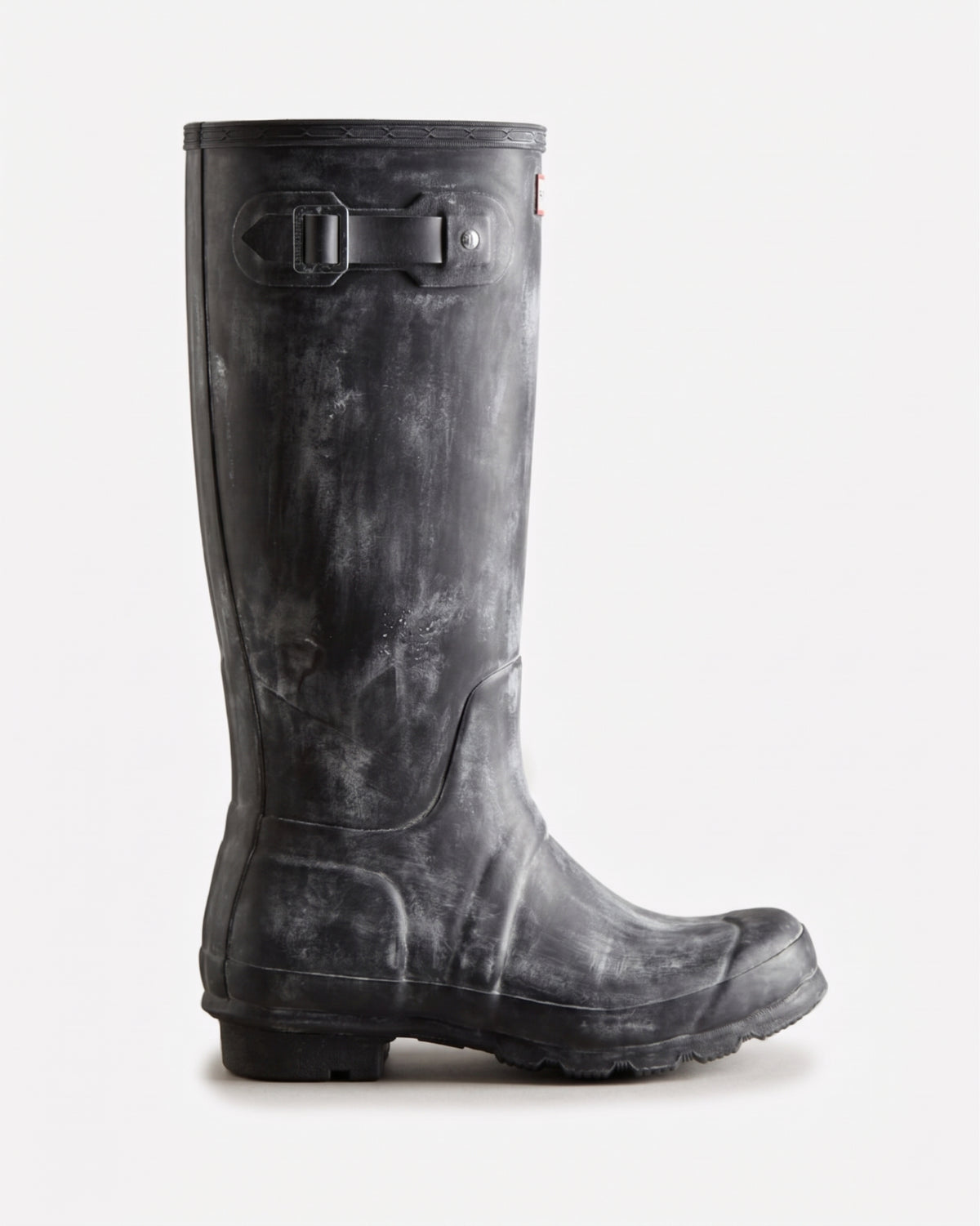
Natural white wax marks on a rubber wellington boot

A natural part of rubber

Blooming is a completely natural process. Insoluble waxes in high-quality natural rubber can migrate to the surface, helping protect your wellies. It is not a defect and can be easily removed.

Olive oil method

  1. Apply a small amount of olive oil to a clean, soft cloth.
  2. Gently rub the white marks in a circular motion.
  3. Wipe away any excess oil with a clean cloth.
Recommended

Silicone rubber spray method

  1. Use a silicone spray formulated for rubber footwear.
  2. Apply sparingly to a clean, dry boot following the product instructions.
  3. Buff gently with a soft, clean cloth.

Drying & Storing Wellies

Simple care helps protect the shape and finish of your wellies.

How to Dry Wellies Properly

  • ✓Let wellies dry naturally at room temperature.
  • ✓Remove insoles and allow them to dry separately.
  • ✓Use loosely packed newspaper to absorb moisture.
  • ✓Allow air to circulate around the boots until fully dry.
  • ×Do not dry near radiators or other direct heat sources.

How to Prevent Wellies from Cracking

Natural rubber can dry and become less flexible when exposed to prolonged sunlight, UV rays or heat. This can leave the surface brittle and more likely to crack.

Help prevent cracking
  • Keep boots out of direct sunlight and away from radiators or other heat sources.
  • Store them indoors in a cool, dry place, away from heat and direct sun.
  • Use a suitable silicone spray or rubber care product to help maintain the rubber’s suppleness; follow its product instructions.
Normal Wear vs Manufacturing Fault

Surface dryness or gradual changes after prolonged exposure to sun, heat or unsuitable storage may be consistent with wear or care conditions. A sudden crack under normal use, particularly on a newer pair, may warrant assessment. Keep proof of purchase and contact the retailer for guidance; warranty coverage depends on the applicable terms and inspection.

How to Prevent Wellies from Splitting

Repeated stress at the boot’s flex points can contribute to splitting over time. Pulling boots off by the heel or forcing them off can also place extra strain on the rubber and seams.

Help prevent splitting
  • Use a boot jack or boot remover instead of levering the heel with your hands or the other boot.
  • Put boots on and take them off gently, avoiding sharp twisting or pulling.
  • Clean and care for the rubber regularly with a suitable product to help it remain supple.
Normal Wear vs Manufacturing Fault

Gradual wear or a split developing at a repeatedly flexed area after extended use may be consistent with normal wear. A split that appears unusually early, or a separation that may indicate a defect, should be assessed by the retailer. Warranty decisions depend on the applicable terms and inspection.

How to Maintain and Protect Your Wellies Long-Term

A few simple habits can help keep your wellies comfortable and ready for many seasons.

Use a boot jack

Use a boot jack to remove your wellies gently, avoiding forceful pulling that can strain the boots.

Protect with silicone spray

Apply a suitable silicone spray regularly, following the product instructions, to help care for the rubber surface.

Choose moisture-wicking socks

Wear moisture-wicking Wellington socks to help keep feet comfortable and manage moisture inside your boots.

Ready for your next adventure?

Explore boot care essentials to look after your wellies, or find your next pair in our women's and men's collections.

Frequently asked questions

Why are my wellies going white/chalky?

A white, chalky film can appear on natural rubber wellies as waxes migrate to the surface. It is a normal characteristic of rubber and is not a fault. Wipe the boots with a damp cloth and use a rubber boot care product if needed.

Can I put wellies in the washing machine?

No. Machine washing can damage the rubber, seams and lining. Clean the outside with lukewarm water and a soft cloth, then allow the boots to air dry naturally.

How do I stop my wellies from smelling?

Let the boots and insoles dry fully between wears. Remove the insoles if possible, air them separately, and store the boots upright in a cool, dry, well-ventilated place. Avoid putting damp boots away.

Can I dry wellies on a radiator?

No. Direct heat can dry out or deform the rubber and may damage the lining. Wipe away excess water and let the boots dry at room temperature, away from radiators and direct sunlight.

How do I clean neoprene-lined wellies?

Wipe the outside with a damp cloth and mild soap. Clean the lining gently with a cloth and a small amount of mild soapy water, then wipe with clean water and air dry thoroughly. Do not machine wash or use strong detergents.

Why are my wellies cracking, and can they be repaired?

Cracking can result from age, prolonged exposure to heat or sunlight, or natural wear. Rubber wellies are not generally designed for home repair; stop wearing boots with cracks and contact the retailer or manufacturer for advice about assessment and repair options.

Why are my wellies leaking, and can it be fixed?

Leaks may be caused by punctures, split seams or wear. Check where water is entering and contact the retailer or manufacturer for advice. A leak may not be repairable, and any repair can affect the boot's waterproof performance.